2023 M&A opportunities in Southeast Asia – Part 1 – The majors
(Originally published on January 12, 2023)
In my review of 2022 M&A in Southeast Asia, I talked about the quiet quitting of the majors from the region.
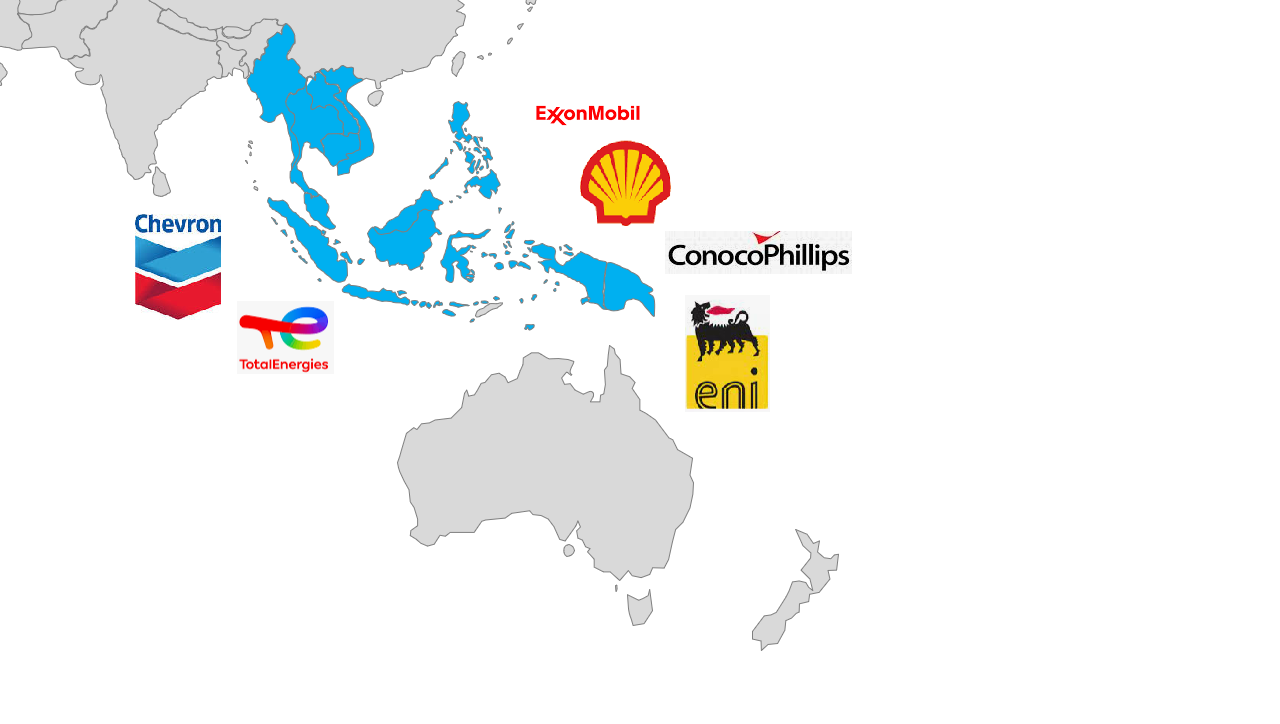
In this article, I’ll take a look at each of the majors’ upstream positions in the region with a view to whether or not they may look to make divestments this year. One factor that may play on us seeing a little less activity with the majors this year is that the pressure to make divestments seems to have cooled owing to the increases in oil and gas prices and the recovery of their share prices.
Why would a major choose to stay in a country?
For a major to remain in the upstream space in a country in the region, it really requires at least one of the following, but ideally a combination of at least two of these.
- Base production (ideally with upside): an asset or collection of assets that are providing significant levels of production. Ideally, there would be upside that either forms a part of the asset or could be augmented to provide additional value.
- A significant discovery: an existing discovery that is material in scale and offers a realistic timeline for development and cashflow.
- An exploration play with potential for material volumes: majors are key to providing the knowledge and cash to perform some of the frontier exploration required in the region. However, the potential prize needs to be large enough.
It is fair to say that the scale and number of opportunities in Southeast Asia struggles to attract the major players. This makes is unlikely that we will see the majors make country entries / re-entries in the region.
In terms of divestments, one additional consideration for the majors is their wider business within a country, e.g. LNG, refining, marketing. Keeping a minor upstream asset may
ExxonMobil
Over the last few years, ExxonMobil’s upstream presence has decreased significantly in the region, with regional analysis now being done out of Melbourne rather then within the region, and the regional offices limited to operations. There have been active processes or rumours of potential divestment around pretty much all of their assets. The table below summarises the assets they hold in the region:

Malaysia
ExxonMobil assets consist of mature oil and gas fields offshore Peninsular Malaysia as well as some deepwater exploration acreage offshore Sabah.
The Peninsular Malaysia assets have a long history with some of the original awards coming in the 1970s. There have been a number of shifts in ownership and contracts with these assets but ExxonMobil currently hold a 50% stake in key producing oil and gas assets, with the remainder held by PETRONAS
In late-2019, it was announced that ExxonMobil had started the process to divest these assets. A number of companies were rumoured to be involved in the process, including Enquest, Hibiscus Petroleum, Trident Energy & MedcoEnergi. From my understanding, Trident were the closest to acquiring the assets but couldn’t come to a price agreement with ExxonMobil. The recovery in oi land gas prices mean that ExxonMobil’s expectations are likely to have increased further but there is no reason why we couldn’t see another sales process here, if ExxonMobil believe a buyer could be found.
Indonesia
ExxonMobil hold a single asset in Indonesia, the Cepu PSC, in which they hold a 45% stake. The asset produces oil from the Banyu Urip and Kedung Keris field developments and has been the top oil producing PSC in Indonesia since 2019.
It is clearly a great asset but, given it is the only asset in which ExxonMobil hold an interest in the country, some decisions will need to be made about where they go from here. Either they need to come up with some growth strategies, or they may look at divestment options. The recent appointment of a new VP of Business Development for the country likely confirms this too. If it was to come up for sale, there should be good interest from PERTAMINA, domestic players such as MedcoEnergi and even some international companies with goals of expanding in Indonesia. However, any buyer would need deep pockets.
Thailand
ExxonMobil hold a stake in two onshore concessions that produce some limited volumes of gas that is used for domestic power generation. They hold 80% in the Nam Phong concession and 10% in the Sinphuhorm concession. Production from these assets is limited in regional significance but ExxonMobil hold a significant position in the downstream space in Thailand so may hold some secondary value.
There were rumours since 2019 that ExxonMobil were running a process to divest these assets, with my expectation that either PTTEP or a domestic player would acquire them. However, there seems to have been little in the way of progress.
Vietnam:
ExxonMobil hold a 63.75% in Block 118, in the Song Hong Basin. The block contains the Ca Voi Vanh (CVX) gas discovery that was made in 2011. The asset is challenged by having a CO2 content of about 30%, which will make it increasingly challenging for ExxonMobil to develop. An additional development challenge comes from the fact that ExxonMobil’s partners in the asset: PetroVietnam and PVEP will struggle to be able to invest the required capital until all of the enquiries related to graft allegations are complete, and there is no timeline for this.
There have been ongoing rumours of a sales process around the asset for a number of years, although little confirmation has ever come out. Any buyer would need to commit to develop the project and believe that the associated power plants would also be developed. The rumour had been that Russian companies (Rosneft / Zarubezhneft) were the interested parties but I doubt that the current political climate would allow ExxonMobil to divest to a Russian company for a good few years.
ExxonMobil are putting a lot of effort into LNG import projects in Vietnam, which may see them hold onto this asset and make some of the right noises but no real progress.
Chevron
It has been a tough few years for Chevron in Southeast Asia as they have lost major producing PSCs and concessions in Indonesia and Thailand.

Thailand
With the loss of the Erawan concessions to PTTEP, Chevron’s upstream position is now limited to a couple of the smaller concessions that provide some production. There is potential to develop the Ubon project, but FID would only be taken once the future of the concession post-expiry is resolved.
From an upstream perspective, Chevron could easily look to divest these assets and exit the country. However, their downstream business may limit any desire to divest.
Indonesia
With the loss of the Rokan PSC to Pertamina, Chevron’s reason to remain in Indonesia is pretty much gone. They currently have a little bit of production from the Bangka field but their main remaining asset is the Rapak and Ganal PSC’s that host the fields that make up the much-vaunted Indonesia Deepwater Development (IDD).
There has been an active data room for these assets and Eni have been talked up as the likely buyers. However, it all gets a little messy given the current PSCs expire in 2027/2028 and Chevron will not be in a generous mood given how they lost Rokan. I’d hope we see some movement this year but….this is Indonesia.
Myanmar
Chevron have an interest in the Yadana asset. Prior to the current political challenges, Chevron had already tried to divest but issues with taxes seemed to block this.
They have already announced their intention to divest from Myanmar owing to the political situation but they are looking to sell, rather than TotalEnergies choice to simply walk away. The logical buyer here would be PTTEP, but the relationship between the two may be difficult owing to the issues around the handover of Erawan in Thailand.
Bangladesh
Chevron has a major role in Bangladesh, holding three producing assets in Bibiyana, Jalalabad and Moulvibazar, that produce over 50% of domestic gas production.
In 2017, they announced the divestment of these assets to a conglomerate of Chinese companies. However, the sale was blocked and Chevron cancelled the sale.
It seems unlikely that Chevron will look to divest these assets in the coming years.
Shell
Shell’s position in the region has shrunk significantly over the last few years, with exits from Thailand and Philippines.

Malaysia and Brunei
Shell have a very long history here and operate a large number of key assets. They have stated that these countries fall in their key focus so we can expect them to stay.
However, there may be some further gentle pruning around the edges.
Indonesia
Shell’s only asset here is the Masela PSC that contains the large Abadi gas field. Shell have been running a process to divest this but interest has been limited. Recent press reports have linked a number of companies including ExxonMobil and PETRONAS to the asset, but whilst they will have had an interest in the data room, I can see either of them acquiring and developing the asset. If seems most likely that PERTAMINA will be pressured by the government to be the buyer of last resort to help the government to grow gas production. Shell will likely end up getting a good price, which seems odd when there are no competing bids.
BP
BP’s position in the region is pretty much limited to Indonesia, although they did have a small indirect interest in Vietnam through their stake in Rosneft.

Indonesia
BP’s presence focusses around the Tangguh LNG project, as well as some exploration acreage. This Tangguh is globally significant, provides LNG for export, is undergoing expansion, and the PSC was just extended to 2055. I can’t see BP looking to divest from Indonesia. In addition, they will likely continue to pick up some other exploration acreage to maintain their strong government relationship.
ConocoPhillips
2022 saw ConocoPhillips shrink their presence in Southeast Asia after they completed the sale of their Indonesian assets to MedcoEnergi in March. Their presence in the region is now limited to Malaysia.

Malaysia
ConocoPhillips hold a stake in a number of assets in Sarawak and Sabah. The major producing assets include Gumusut-Kakap, Malikai, SNP and the Kebabangan cluster. In addition, they continue to explore, with wells drilled in WL4-00 and new acreage awarded in 2022 with SB-405.
I understand that they looked at divesting WL4-00 over in the last couple of years but, as the initial bids did not meet their expectations, they stopped the process.
There may be some potential for optimization around these assets and WL4-00 may be considered again for divestment once some further appraisal has been completed.
TotalEnergies
TotalEnergies have been shrinking in the region for a number of years due to the expiry (and non-renewal) of the contracts covering key assets. In Indonesia, they lost their 50% interest in the Mahakam Offshore PSC when it expired in 2018 (now Pertamina). In Thailand, they lost their 33.33% interest in the Bongkot concessions when they expired in 2022 (with the last bits expiring in 2023). In addition, 2022 also saw them walk away from their interests in Myanmar owing the political situation.

Indonesia
TotalEnergies still have some very minor gas production from the Ruby field. However, the field is coming to the end of its life and the PSC will expire in 2027.
Brunei
TotalEnergies' production in Brunei comes from their interest in the MLJ asset. Given their other exits in the region, this would be an obvious candidate.
Malaysia
They have some exploration interest in deepwater Sabah that includes the Tepat discovery. However, I am not convinced they will want to spend any more to chase this and could relinquish the acreage.
Eni
Eni have been quietly effective and selective in the region, making them more likely to be potential buyers than sellers.

Indonesia
Eni's focus is the Kutei basin, where they have a number of fields producing through their Jangkrik facilities, and plans for further backfill activities. They are likely to take Chevron’s interest in the adjacent Rapak and Ganal PSCs, but are likely to want some reassurance about what will happen at the expiry of the contract and, potentially, negotiate some of the key terms. Some of their exploration acreage outside of the Kutei basin could be divested / relinquished.
Vietnam
Eni have had good success Song Hong basin with the discovery of the Ken Bau field. However, monetisation remains the challenge. I would expect them to remain active in the basin.